1876 Century League Recap: Centennials & Unions Dominate, Chaos Erupts in Cincinnati and St. Louis
In the centennial year of the nation, America’s newest professional base ball league launched with thunderclap ambition and no shortage of drama. The Century League, founded by Chicago industrialist and former Union officer William Washington Whitney, brought together eight clubs from the country’s largest cities — and by season’s end, not all of them would remain in the fold.
Philly Sets the Standard
From the outset, it was clear that Jeff Edgerton’s Philadelphia Centennials were a cut above. Backed by financial discipline, tactical consistency, and relentless offensive pressure, the Cents closed the season with a 43–17 record, playing dominant baseball before ending the season on a sour note by refusing to finish their final road trip. Edgerton cited "fatigue" and that his club had sewn up the pennant. This turned out not to be true: while the Cents remained home, the Brooklyn Unions finished their own schedule to the tune of a 46-20 mark, tied by today's standards, but losing out by having a winning percentage of .697 to Philadelphia's gaudy .717 winning percentage.
Boston- which also played all its games - was third at 47-23, with a .671 winning percentage. If having three powerhouses leads you to conclude there had to be some bad teams... well you're right. Whitney's club, the Chicago Chiefs, rounded out the "good" clubs by posting a respectable 39-26, .600 season. But the bottom fell out after that. The St. Louis Brewers went 28-36, followed by the Detroit Woodwards (23-46), Cincinnati Monarchs (20-49) and at the bottom of the heap: the putrid New York Knights (14-43). The Knights, like the Centennials, didn't complete the schedule. They offered a similar excuse, but the real reason was that ownership (Charles Bigsby) didn't want to spend the money to send the club west.
Tension Turns to Turmoil
After a promising (if uneven) debut season, the real drama came late — in the form of a mutiny.
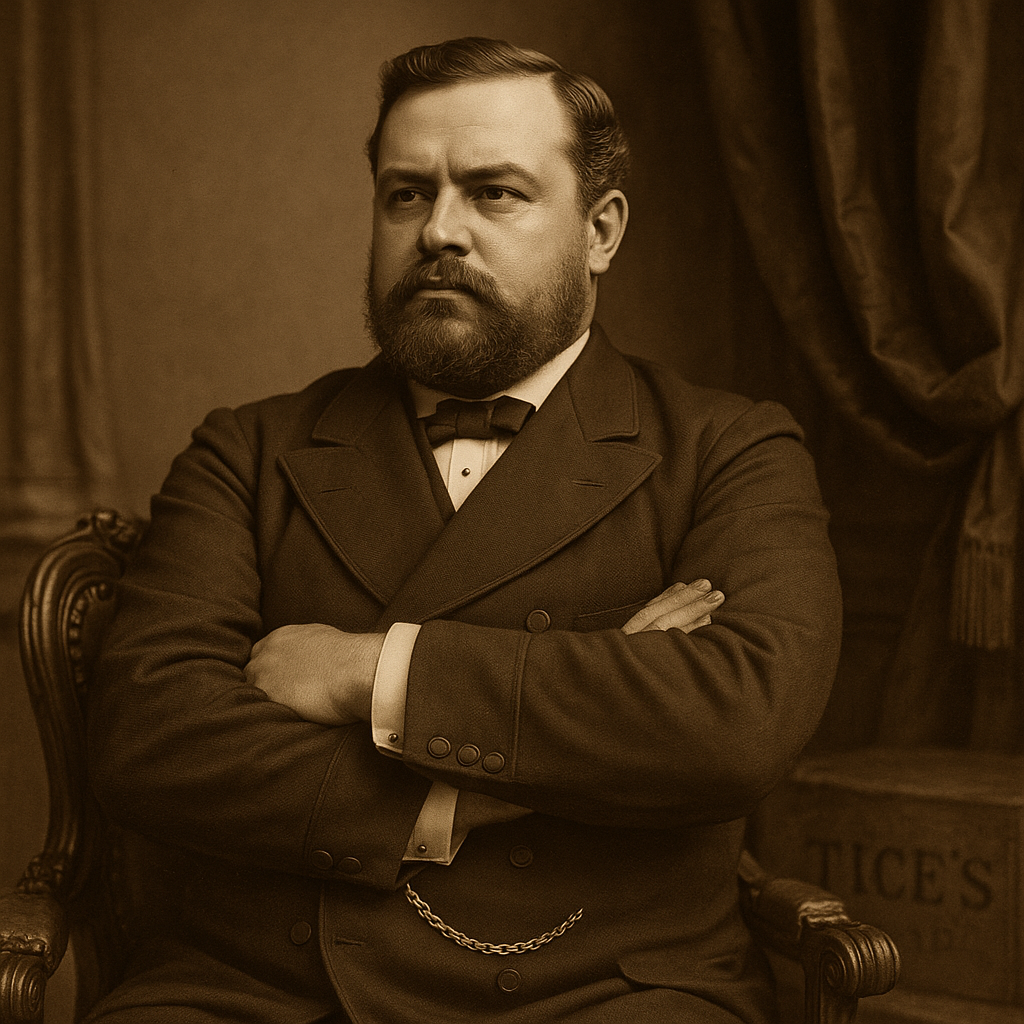
James P. Tice, circa 1876
Before the Century League could reach its first anniversary the brewing resentment among two of its club owners came to a head. The issue was perceived the special treatment for the Philadelphia and New York clubs at the expense of the Cincinnati and St. Louis clubs. Considering that New York and Philadelphia were the two largest cities in the country and that meant more potential customers, it was no surprise that a shrewd businessman like William Whitney would not want to leave those cities open.
This bottom-line reasoning was not good enough for James Tice of Cincinnati and Hans Fuchs of St. Louis. They stood on the agreement upon which the league had been founded that all clubs guaranteed to finish their complete "championship" schedule. Since both New York and Philadelphia neglected to do so, Tice & Fuchs believed they should be expelled from the league. Whitney refused to do so, instead opting for a guarantee from Charles Bigsby (NY) and Jeff Edgerton (Philly) to not repeat themselves or face expulsion.
Thus thwarted, Tice and Fuchs removed their clubs from the Century League and would "operate as independent touring clubs" instead. So the Century League embarked on it's 1877 campaign with only six clubs.
Interestingly, this would not be the last the baseball world would hear from Tice & Fuchs. It also prevented the strangling at birth of one of the two oldest existing professional clubs as today's Philadelphia Keystones trace their history back to that 1876 Philadelphia Centennial club that defied the league rules by not completing its schedule. New York would be another matter, but that's a story for another day....