James Pembroke Tice
Born: October 4, 1836 – Cincinnati, Ohio
Height: 5’9” Weight: 212 lbs
Profession: Soap Magnate, Political Agitator, Base Ball Club Owner
Century League Role: Former Owner, Cincinnati Monarchs
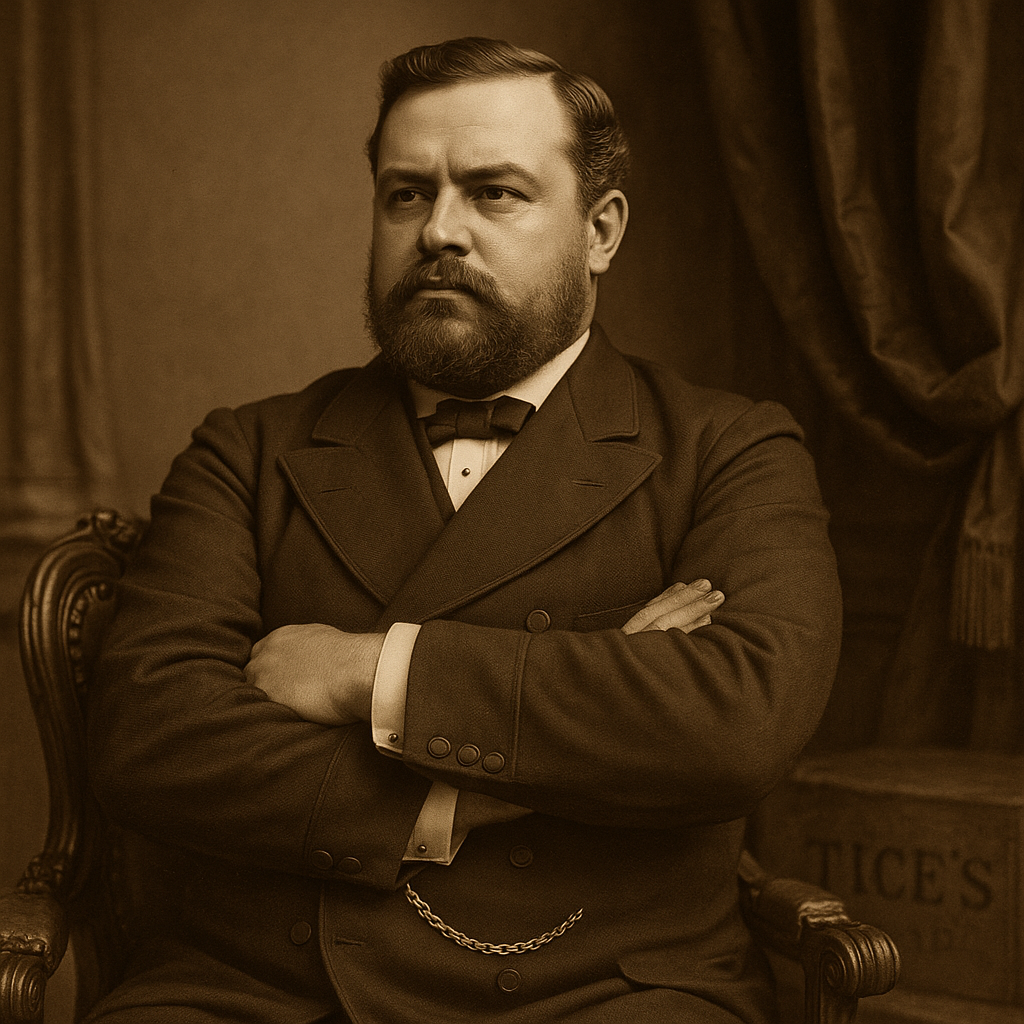
The son of a German-born tallow merchant and an Ohio River ferryman’s daughter, James Tice clawed his way to local prominence in the Queen City through the least glamorous of trades — soap. He founded the Pembroke Refining Company in 1857, perfecting a method of mass-producing hard soaps for industrial and domestic use. By the end of the Civil War, he was among Cincinnati’s wealthiest self-made men, if also among its most abrasive.
A lifelong contrarian and inveterate meddler, Tice carried himself with the overconfidence of a man convinced the world owed him attention. He dabbled in local politics (and insulted half the city council), funded public entertainments (then sued when not properly credited), and declared base ball to be the “only tolerable game devised by man,” before promptly trying to change its rules to suit his liking.
When William Whitney unveiled plans for a professional base ball league in 1875, Tice was among the first to sign on — not out of shared vision, but to ensure he had a seat at the table (and possibly, under the right circumstances, the gavel in his hand). He founded the Cincinnati Monarchs, named not for any fealty but as a pointed jab at Whitney’s role as “president” of the new Century League.
Tice clashed with Whitney from the beginning, opposing league rules on scheduling, player discipline, and revenue sharing. By midseason 1876, with his club sagging in the standings and his ego bruised by the success of Whitney’s Chiefs, Tice took his grievances public. In concert with St. Louis Brewers owner Hans Fuchs, he aired the league's dirty laundry to the newspapers: Philadelphia and New York had purposely failed to complete their schedules, and Whitney had done nothing except extract promises from the clubs' owners (one of which was his right-hand man Jeff Edgerton) to "never do it again." Tice and Fuchs presented Whitney with a public ultimatum: New York and Philadelphia would go, or they would.
The act of defiance backfired. Whitney was not a man easily coerced — Tice left the league as he had lived within it: loud, defiant, and alone. And he took Fuchs with him.
Though no longer a base ball magnate, few believed Tice’s ambitions were finished. As one rival put it, “So long as he’s drawing breath and casting shadows, James Tice is plotting something.”
It turned out that rival was correct: in 1882, Tice launched his own league, called it the Border Association and declared he would put Whitney and the Century League out of business. it didn't - quite - turn out that way.